Search "pr newswire pricing" in a clean incognito session and Google's AI Overview writes the answer using our research. Not once: Pressonify.ai is cited on three separate facts in a single AI answer, from the tiered per-release structure to the membership fee to the distribution rates.
We build citation tracking for a living, so we are saying this carefully: this is what winning at answer-time looks like, receipts included.
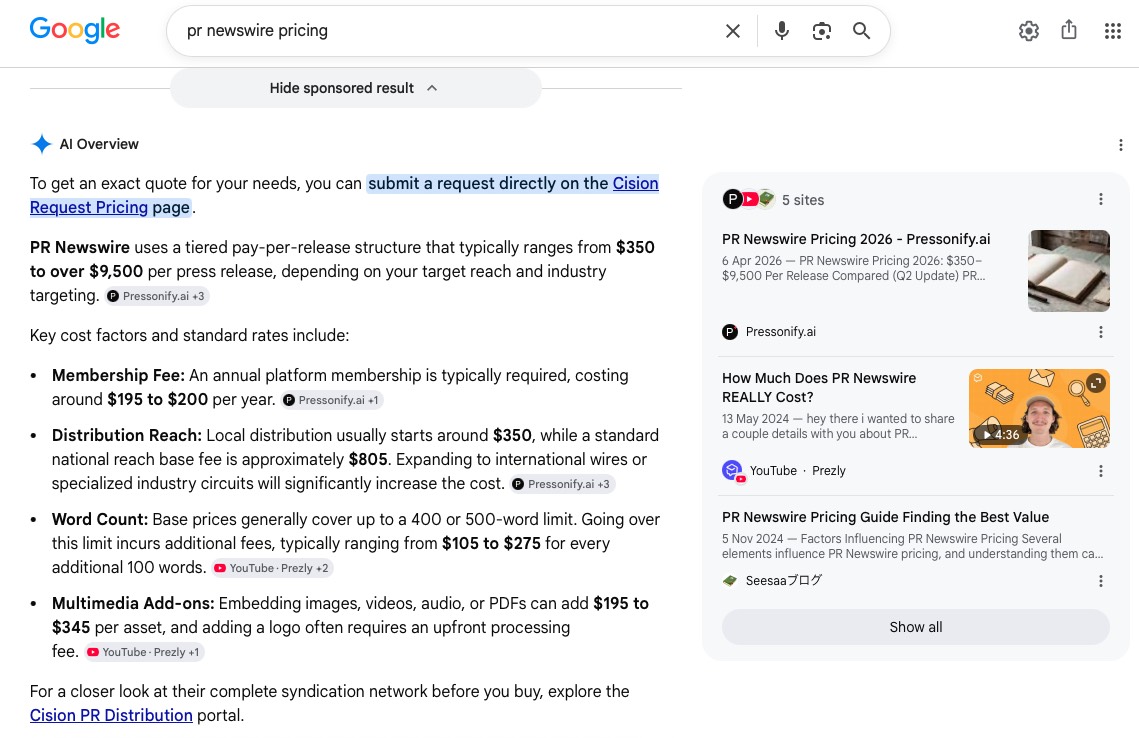
What actually happened
Google's AI Overview is the AI-composed answer that now sits above the traditional results for a growing share of searches. When it makes a claim, it attributes the claim to the source it drew from.
For one of the most commercially loaded queries in our industry, the source it chose was not the incumbent, not a trade publication, and not an agency. It was our wire-pricing research: the comparison we keep checked against published rate cards and third-party pricing guides, updated on a dated schedule, and structured so machines can read every number.
The irony is the whole thesis in one screenshot: PR Newswire's own pricing is explained to the world by its €49.95 challenger, because at answer-time the best source beats the best-known brand.
The numbers underneath the screenshot
A screenshot can be a fluke. Search Console data is not. Over the last three months:
- The single query "prnewswire pricing" generated 294,663 impressions for our page.
- The source page drew 448,249 impressions across the query cluster, holding position ~4.6.
- Clicks were a fraction of that, and that is the point: the answer absorbed the click. Searchers got their information inside the AI Overview, attributed to Pressonify, without ever leaving Google.
This is the Citation Economy mechanic we have been documenting since the Perplexity capture that recommended PlantGift over Interflora and the 41 citations one launch drew in 48 hours: visibility has moved from the ranked list to the composed answer, and there is no page 2 in an AI answer. You are the cited source, or you are absent.
How a challenger outcites an incumbent
There is no secret relationship with Google here. There is a method, and it is boringly repeatable:
- Sourced, specific numbers. Every price in the research traces to a published rate card or a named third-party pricing guide, with the check date stated on the page. AI systems quote specifics, not adjectives.
- Structure machines can parse. Comparison tables, FAQ schema, clean headings, and full machine-readable markup mean the facts arrive pre-extracted.
- Honest freshness. The page carries dated update notes describing exactly what was re-verified and when. Freshness is a trust signal for both crawlers and readers.
- A citable asset, not a sales page. The research answers the searcher's question first. The commercial story earns its place after the useful part.
Update, July 2026: the pattern is widening
It is not just AI Overviews, and it is not just pricing. In July 2026 we captured Google's AI Mode surfacing a different piece of our content, the platform comparison "7 Best AI Press Release Generators in 2026", as a cited source in its answer, alongside the usual video and forum results.
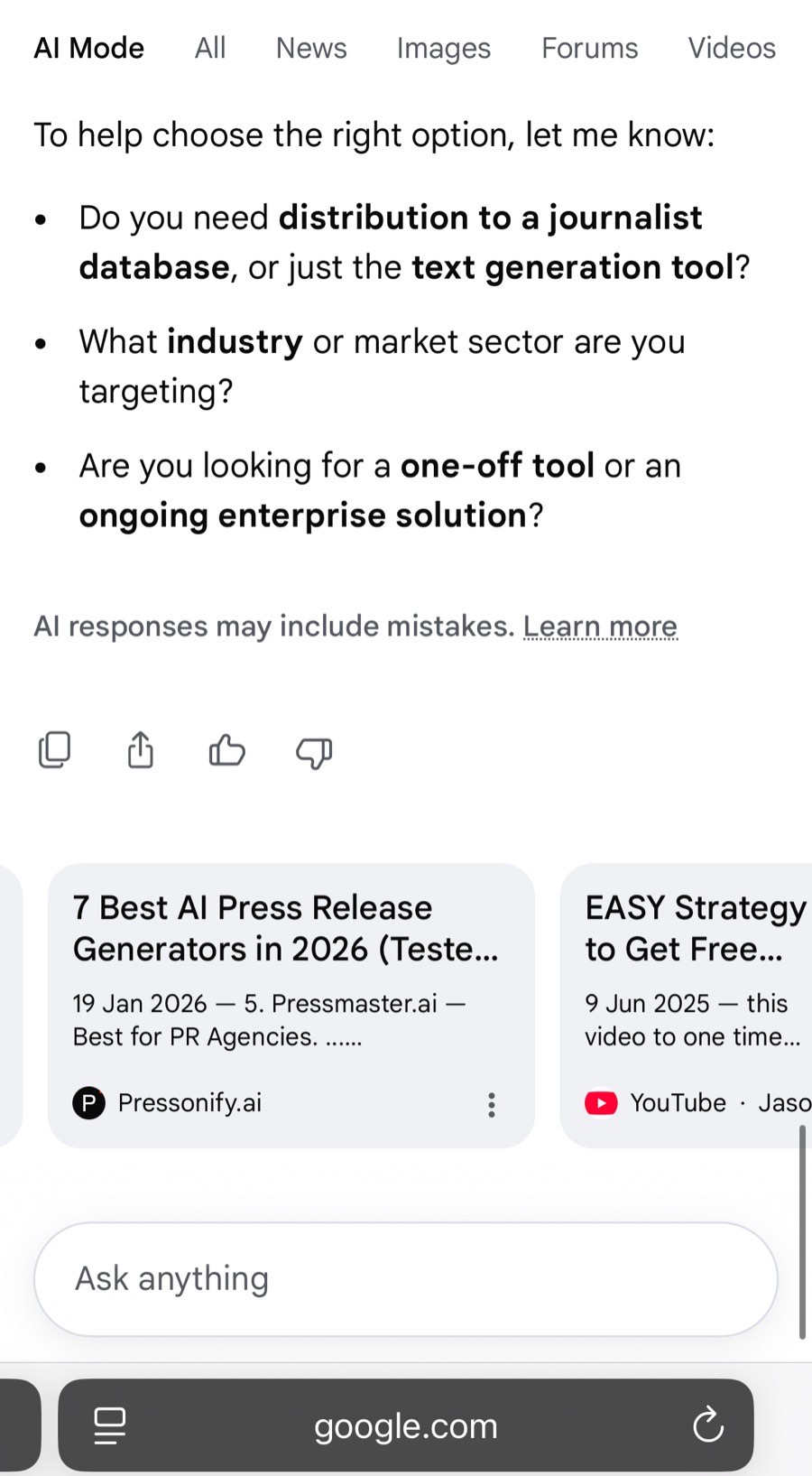
The search was run in an incognito session, so this is not a personalised result tied to any logged-in account: a clean browser reached the same conclusion. Two different Google AI surfaces, two different pieces of our content, cited within weeks of each other. That is what structural citability looks like: not one lucky answer, but content engineered so that whichever way an AI engine slices the category, your page is in the citation set.
One honesty note, because receipts culture cuts both ways: AI Overviews are volatile. They vary by session, region, and week, and the citation we captured today can rotate tomorrow. That is why the durable evidence is the Search Console data above, not any single screenshot, and why we track citations continuously instead of framing one capture.
What this means for your business
Somewhere in Google right now, an AI Overview is answering your category's buying questions. Someone is being cited for them. The physics that put a €49.95 platform's research above a decades-old wire's own voice apply to your market too, and they favor whoever publishes the most citable source, not whoever is biggest.
Two ways to act on that today:
- See where you stand. The free Invisibility Test takes about 60 seconds and shows whether AI systems can find and parse your business at all.
- Publish a citable source. Every Pressonify release ships with the same ingredients that earned the citation above (structured data, FAQ answers, dated facts on a crawlable page), backed by AI-first press release distribution, and your company's first one is €9.95, with citation tracking that hands you the receipt when an AI quotes you back.
The wire services sold reach. The Citation Economy pays out on being the answer.